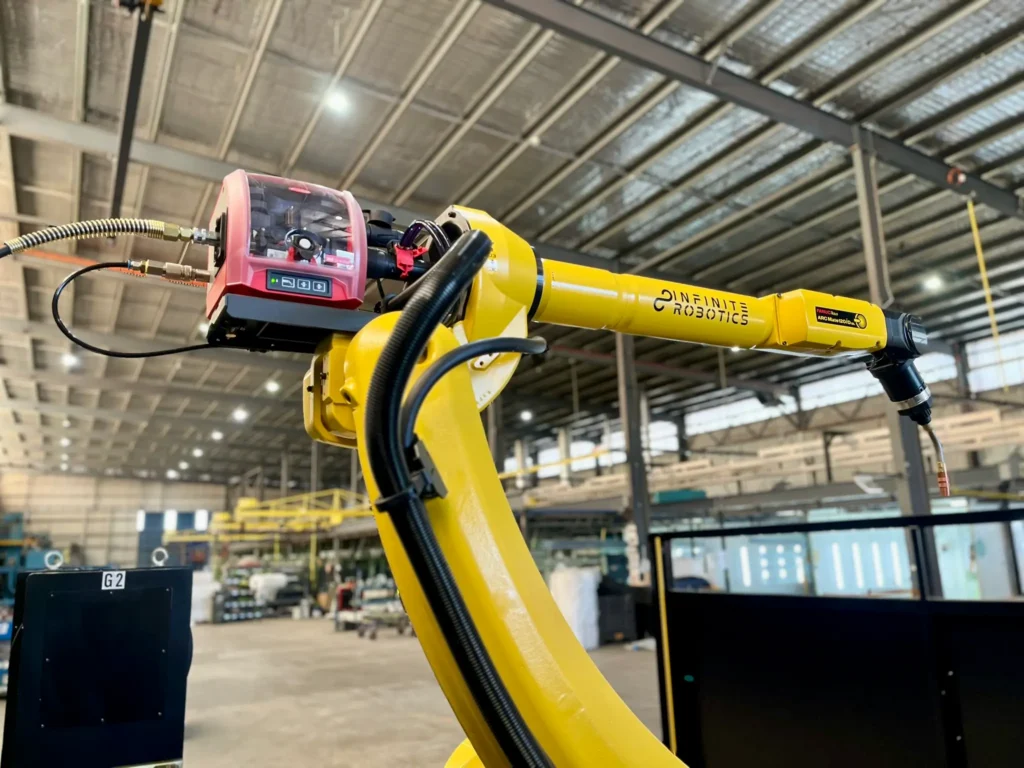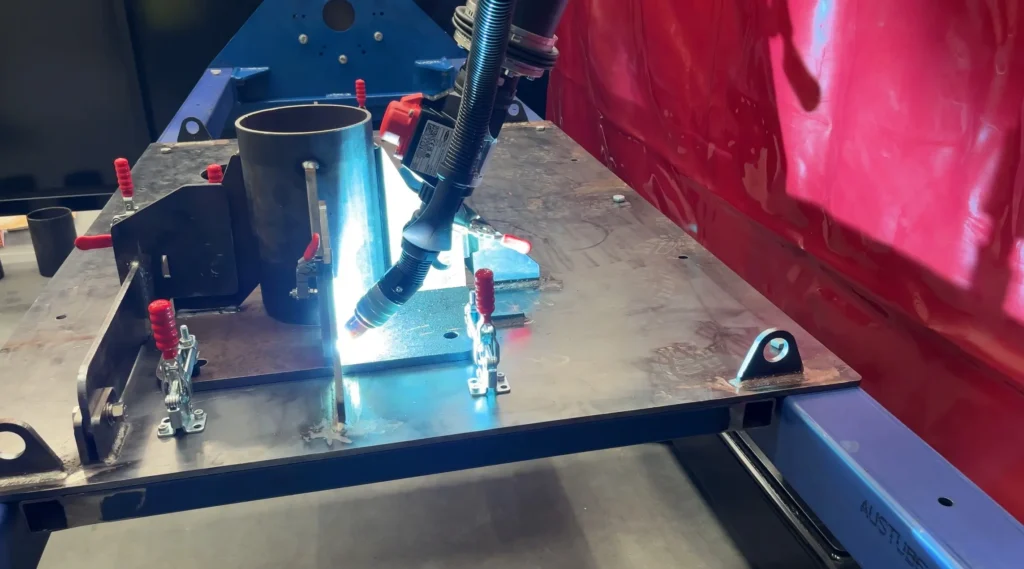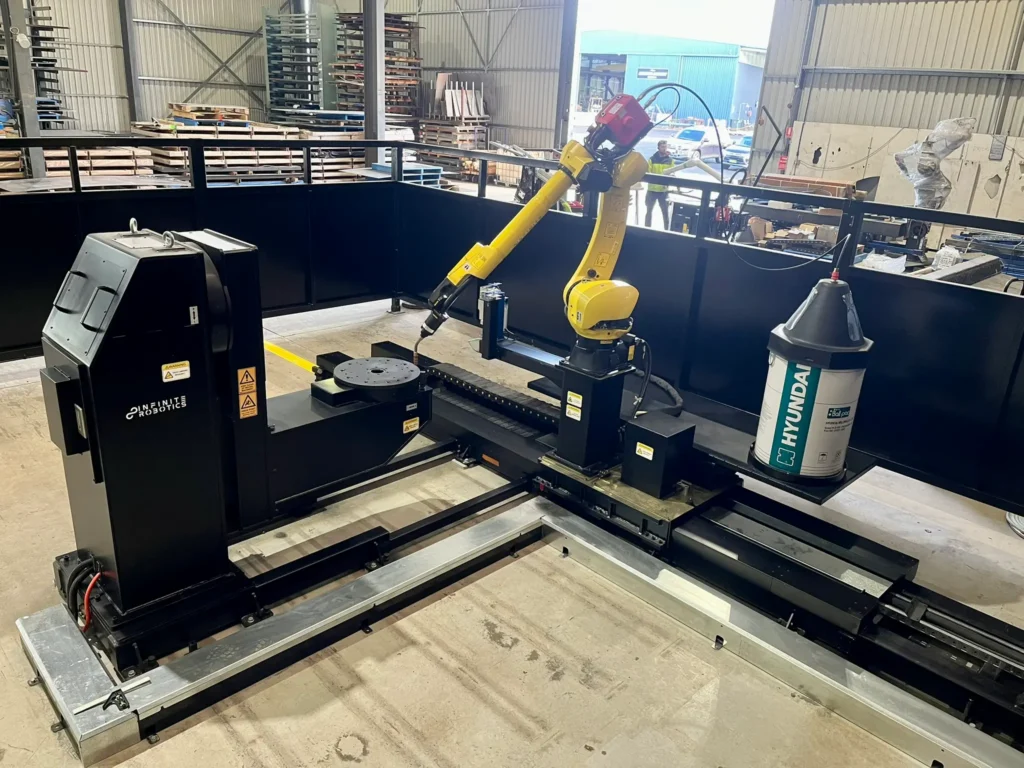
Automation is all around us. There’s a new story everyday about how robots or AI are changing the way we do things. This is no different in the welding industry. Automated welding machines are taking Australian industry by storm, transforming production lines and helping businesses scale exponentially without increasing their headcount.
Welding robots undoubtedly make a difference, but knowing whether it’s the right time to take the leap and make the investment is the real challenge. Every production line is unique, faces different challenges, has different goals, and has a different amount of budget available.
In this article, we will explore the signs that it may be time to automate your welding process.
Signs You Should Automate Your Welding Process
There are a number of clear signs that your welding operations are ready for automation, and many manufacturers who have been through it and made the jump will tell you they wish they acted on those signs earlier. While it’s only natural to be a little sceptical at first and want to wait, this can just put you behind the competition and leave you struggling through when solutions are available.
Here are a few clear signs that you should automate your welding process:
1. You Are Doing the Same Welds Repeatedly
One of the strongest indicators that welding operations are ready for automation is if you’re constantly handling repetitive weld sequences or similar components. This is where automated welding machines thrive.
Once programmed, welding robots can execute that program identically over and over again on every part, delivering consistent results day-in and day-out without getting bored or fatigued. Moreover, the more times that same weld program is performed, the greater the return on that programming.
To judge whether your business fits into this category, ask yourself how many times per week your team welds the same joints or components. If the answer is high, it’s time to invest in welding automation.
2. You Are Struggling to Find or Keep Skilled Welders
Labour shortages are impacting manufactures all around the world. With less apprentices starting each year and the existing workforce continuing to age, it’s becoming more and more challenging to find and retain skilled welders.
If your business is feeling the pain of this labour shortage, it may be time to invest in robotic welding systems. Robot welders are ready to integrate into your existing team, learning from your best human welders and automating their processes. This helps free your experts up to focus on higher value tasks while the robots handle the repetitive tasks.
Moreover, robotic welding systems don’t call in sick, fatigue, retire, or switch careers. They remain loyal to your business, working constantly day after day without complaint.
Ask yourself, if you lost two of your best welders tomorrow, could your production continue at current output? If the answer is no, then it’s time to add a robotic welder to your team.
3. Your Weld Quality Is Inconsistent or Requires Frequent Rework
Weld quality inconsistencies are one of the biggest risks to any production line, resulting in costly and time-consuming rework, safety risks, and damaged reputation. Inconsistencies can occur for a number of reasons. Whether it’s a fatigued worker, lapse in concentration, technique issue, or simple human error, quality issues or mistakes can be costly.
If you’ve noticed more frequent errors or inconsistencies in weld quality, it may be time to consider automation. Automated welding machines execute programs consistently and accurately every time. They don’t test a new technique, get lazy, or make mistakes. They simply follow the same program every time, producing every piece with the exact parameters, torch positioning, travel speed, and heat input.
To figure out if welding automation would make a significant difference to your production, ask yourself how much your weld quality varies between your best operator and your least experienced one and how often you need to rework components.
4. Welding Is the Bottleneck in Your Production
Manual welding processes are physically demanding, skill-dependent, and limited by human capacity and available workforce. With skilled worker shortages impacting workforces, bottlenecks in the welding stage of the production line are becoming increasingly common.
These delays can cause run-on effects across your entire business, extending lead times, reducing capacity, and potentially failing to meet contractual obligations or turning down opportunities due to a lack of guarantee that you can meet them.
Automated welding machines fit into your team, ensuring consistently high quality results, enhancing your productivity, and allowing you to meet demands with your existing team.
Consider where the bottlenecks are in your production process. More often than not, the answer is welding, and if that’s true for your business, welding automation could be the answer.
5. Safety Concerns Are Growing
Welding is one of the higher risk occupations in the manufacturing industry. From arc flashes, UV radiation and fume exposure to spatter burns, manual welding can carry significant health and safety risks for workers.
Australian health and safety obligations around welding fume exposure, UV protection, and manual handling are becoming more strictly enforced and the cost of non-compliance, whether through fines or compensation claims, is significant.
Automated welding robots can help address safety concerns and meet obligations, offering significant safety features. Robotic welders handle the arc, removing the operator from direct exposure to UV radiation, spatter, and the highest-concentration fume zone. Guarded welding cells also create a physical separation between the welding process and the operator.
These features not only help you stay compliant with health and safety requirements, but most importantly protect your workers and create a more inviting work environment for future generations of welders.
To work out if you need robotic welders to strengthen your workplace safety, ask yourself: how confident are you that your current welding setup fully meets your obligations under Australian workplace health and safety legislation?
6. You Are Struggling to Meet Demand or Scale
Many manufacturers reach a point where the next contract, the next customer, or the next production target is within reach commercially but not operationally, because welding capacity cannot be expanded quickly enough. Expanding welding capacity generally requires hiring or training new certified welding professionals. This can take months or even longer with current worldwide shortages.
Automated welding machines can enable scalability. They can handle large-scale welding tasks efficiently, allowing skilled welders to focus on more complex tasks, while the robots work simultaneously. This can help increase your capacity, allowing you to meet demands and even scale significantly without needing to increase your headcount.
To decide whether you need welding robots, consider whether your welding capacity is the reason you are not growing.
How to Take the First Step in Welding Automation
It’s a common misconception that welding automation is only for large factories or high volume production. The truth is, welding automation is for any production line facing challenges meeting demand, safety requirements, or delivering consistent results. Cobots and modular robotic welding systems are great options for any businesses that need flexibility, particularly in high mix or lower volume production environments.
So, if you’ve considered the above and determined that it’s time to welcome an automated welding machine to your team, we can help. At Infinite Robotics, we can help build, install, and service purpose-built robotic welding systems to meet your needs.
We work with you to understand your current welding operations, challenges, and growth wishes in order to recommend and deliver a system that boosts your productivity, enhances your efficiency, and helps you scale your operations. Whether you need a single station, dual station for maximum productivity, or a FlexWeld system to keep up with diverse demands, we can help you find the perfect solution.
Automate Your Welding Processes with Quality Welding Robots
Stop struggling through skilled worker shortages or delivering inconsistent results. Add an automated welding machine to your team to boost productivity, enhance efficiency, and deliver results you’re proud of at a much larger scale.
Contact Infinite Robotics today to discuss your production needs and discover how a robotic welding system could transform your production process.