One of the biggest concerns when it comes to welding automation is that it will cost jobs. This isn’t an irrational fear, but it doesn’t have to be the case. With a workforce-first approach, robotic welding systems are designed to be collaborative. They are designed to support smoother production processes while working with and empowering human operators.
Welding automation offers a solution to the current global workforce shortage, not by replacing skilled workers, but by assisting them. At Infinite Robotics, we believe the best welding robots are operated by skilled welders and tradespeople who combine their trade knowledge with a commitment to upskilling. Our role is to provide the training, mentoring and ongoing support to help them succeed.
Why Robots Need Better People, Not Fewer
Deploying collaborative welding robots without adequately skilled and experienced operators can create challenges throughout production. One of the most common is adapting to change. Customer requirements evolve, designs are revised, and new products are introduced. A skilled operator can confidently modify existing programs, create new welding programs, and optimise processes to suit changing production needs. Without those skills, even small design changes can lead to delays, reliance on external support, and lost productivity.
This becomes even more important in high-mix, low-volume manufacturing environments where the ability to quickly program new parts is often the difference between success and failure. Rather than being limited to a small number of repeat jobs, skilled operators can use robotic welding systems to automate a much broader range of products, unlocking significantly greater value from the investment.
Technical issues and process variations are also inevitable in manufacturing. Skilled operators can identify problems, make adjustments, and keep production moving. Without that capability, downtime increases and the business becomes dependent on external support for tasks that could otherwise be handled in-house.
Ultimately, the most successful robotic welding installations are not those with the fewest people, but those with the most capable people. When welders and tradespeople combine their industry experience with robotic programming skills, they become more productive, more valuable, and better equipped to support the future of Australian manufacturing.
Rethinking the Welder’s Role in an Automated Environment
As welding automation gains popularity, the environment is evolving. This doesn’t mean that operators need less skills, it means they need the same skills, as well as new ones to make the most of the new automation technology.
In automated welding environments, new skillsets are emerging, such as:
- Robot program operation and monitoring
- Weld parameter knowledge and quality control
- Part loading precision and fixture operation
- Quality inspection and fault diagnosis
Experienced welders are actually best positioned to operate welding robots as their in-depth process knowledge enables them to recognise when something is wrong before a defect is produced and address the issue effectively and efficiently.
The Power of Upskilling Existing Welders
In a market that’s currently facing global workforce shortages, upskilling from the inside is a game changer. It’s becoming increasingly difficult to hire skilled operators, making upskilling your existing workforce necessary. However, it’s also a great way to ensure that your workforce remains loyal and aligned with your company.
Your existing team already has years of experience with your processes, products, and strong relationships with the rest of the team and clients — things that new hires can’t gain quickly. By investing in their development, you can demonstrate your confidence in them and appreciation of their time and efforts. This will not only deliver better quality results over time as they improve their skills, but also strengthen their loyalty, improving long-term retention.
Infinite Robotics’ Education and Training Philosophy
At Infinite Robotics, we follow a workforce-first philosophy. We believe that highly skilled operators are the key to effective and efficient production lines. Our automated welding machines are designed to collaborate with your most skilled operators, not replace them.
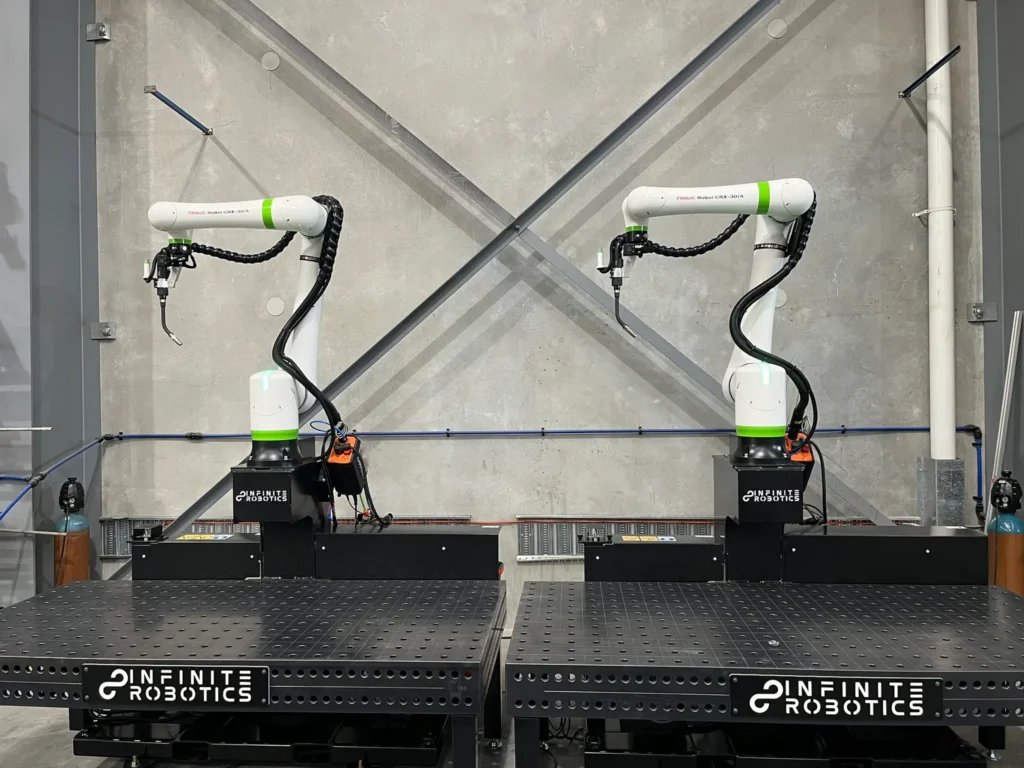
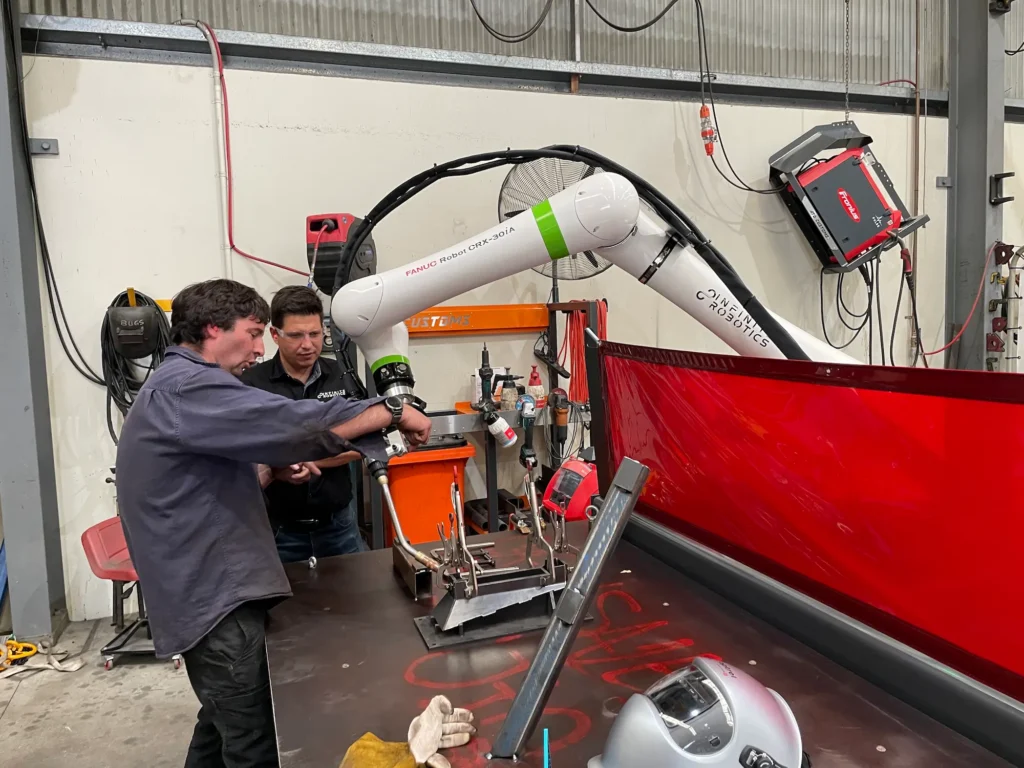
Our welding robots learn from your best technicians, embedding their knowledge and automating the processes. This allows operators to enhance their capabilities, handling more throughput with their existing team and learning new skills to get the most out of these cobots.
Training Designed Around Real Production
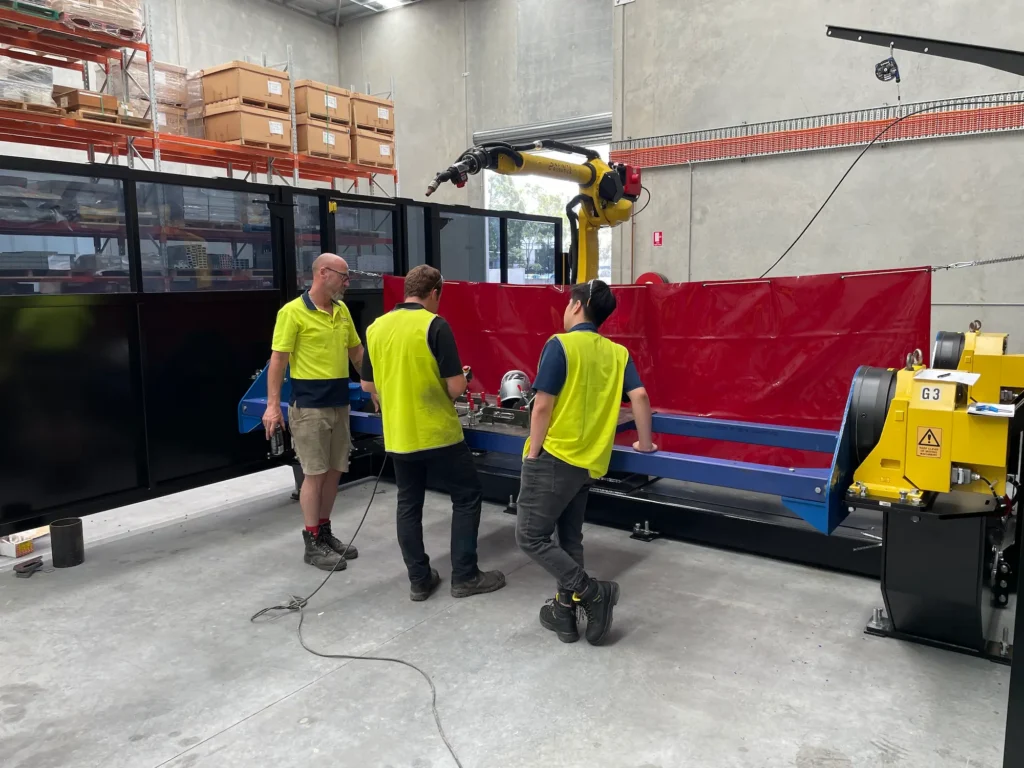
We are committed to empowering your team and helping you get the most out of your welding automation. And we believe that the success of your robotic welding system depends on the people operating it. That’s why we deliver practical onsite training tailored to your system that helps upskill your workforce and provides confidence.
We deliver structured training programs that build knowledge incrementally, ensuring your operators truly understand each step and don’t get overwhelmed. We start with key concepts and work through programming, integration, and troubleshooting. Every lesson is provided onsite using your robotic welding system, so your operators gain real-world experience on the system they’ll be using. Your team also receives a tailored training manual that they can refer back to as necessary.
By the end of the training, your team will be ready to confidently take full ownership of the system. However, with our lifetime service promise, you can trust that we’re only ever a call away. Our local team is always ready to offer support when you need it.
What Workforce-First Automation Delivers
Robotic welding systems operated by well-trained, confident teams consistently outperform those run by undertrained workforces, in throughput, quality, and uptime. When operators have an in-depth understanding of the systems they’re working with and know how to troubleshoot any issues that may arise, it becomes a truly collaborative production line. The cobots handle the repetitive, automated processes and your workforce handles the training, maintenance, and complex, edge cases.
Additionally, manufacturers who invest in workforce development report lower turnover and higher engagement among operational staff. By creating a safer, smoother working environment, where operators don’t feel overwhelmed, overworked, or undervalued, you can significantly boost morale, productivity, and loyalty.
Contact Infinite Robotics today to explore how welding automation can enhance your production line and how our tailored training programs can empower your teams.