In manufacturing, time is of the essence. From massive projects to tight deadlines, every minute is precious. One of the most costly issues in the welding industry is discovering a problem on the production floor that could have been identified at the planning stage. Every error means time and materials wasted fixing it.
Another costly disruption is the time lost between projects. The most efficient production line is one that never stops. Each minute lost between tasks can add up quickly — all together it can often add up to the time needed to fit in an extra project.
By minimising defect risks, rework, and time wastage, manufacturers can significantly improve their production efficiency and increase output, therefore rising profit margins.
Why Precision Engineering Matters
Most welding technicians will have experienced a situation where an issue is noticed halfway through the production process. This then needs to be reworked, using up precious time and resources. Depending on the stage of the process and scale of the defect this can lead to project delivery delays, costly reputational damage, and financial losses.
This plays out across the manufacturing industry every day. However, forward thinking manufacturers are making it rare with advanced welding automation. Innovative systems featuring CAD simulation and cycle time estimation technologies enhance precision, reduce risks, and streamline production.
How CAD Simulations Optimise Welding
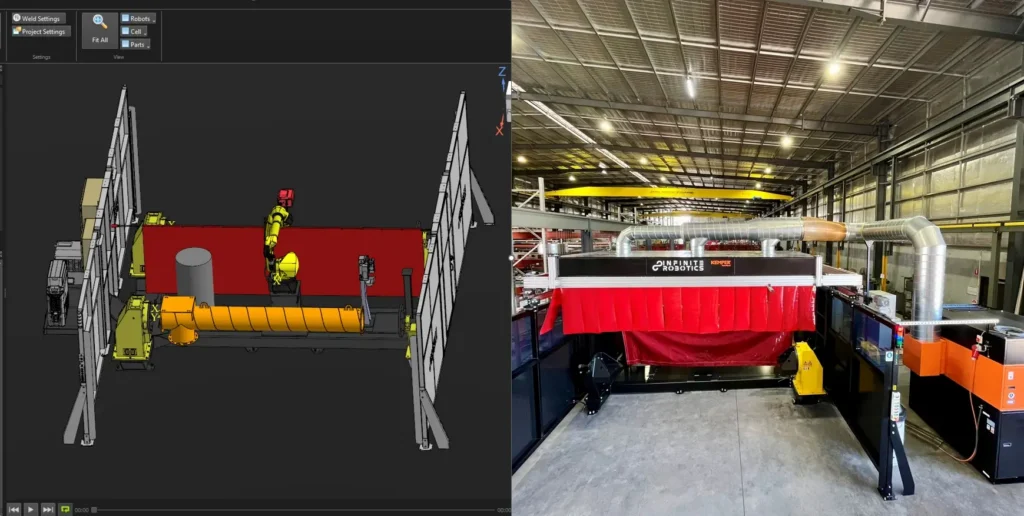
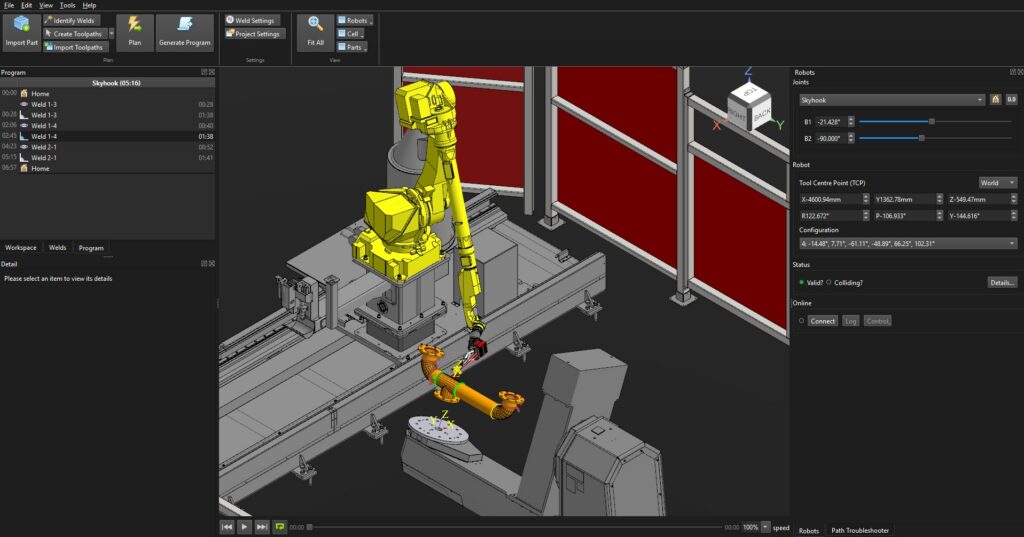
CAD simulation technology creates a digital 3D rendering of the weld cell. This advanced technology allows technicians to import CAD models of parts and fixtures to program robot paths, simulate sequences, detect potential collisions, and verify reachability — all offline without taking the robotic welder out of commission.
The software works by scanning the geometry of the component, automatically detecting potential weld paths and issues, and then verifying and correcting welding angles and clearances. Once the simulation detects no errors, the code can be directly input into the robotic welder.
Offline Programming
CAD simulation programs are built on PCs using offline software, allowing operators to plan projects while robotic welders are simultaneously working on other projects. This eliminates the need to take a robot out of production while a project is being set up, increasing uptime and ensuring a consistent production line.
Automated Weld Path Planning
Modern CAD simulation software is designed to automatically identify weld seams, generating the best automated weld path and sequences. The software automatically identifies potential errors and finds solutions. It tests for joint limitations, singularities, and potential torch collisions, adjusting weld angles and clearances to ensure the most efficient and collision-free weld path.
Testing and refining welding paths in a virtual environment significantly reduces resource consumption, ensuring precise, error-free welds first-time, every time.
How Cycle Time Estimates Improve Weld Efficiency
Predictive cycle time technology provides a clear estimate of how long each project will take to complete. Traditionally, technicians calculate welding cycle time using a formula, adding the weld time, repositioning time, and non-weld overhead time, such as loading, part prep, and torch cleaning. Automated welding machines calculate this formula automatically, providing a clear estimate.
Effective Production Planning
Automated cycle time estimates not only reduce manual project planning time, but also streamline processes. By knowing when a cycle is set to finish, operators can plan exactly when the next piece needs to be ready to load. This allows them to plan out their day effectively, setting times to load and unload machines, eliminating guesswork and minimising downtime.
Over time, as you complete more projects, you will get a good idea of how many projects can be completed in a day, week, and even month. This provides a clear estimate of your output capacity. This allows you to confidently scale your production and take on contracts knowing you can meet the demands and deadlines.
How Welding Automation is Transforming Workflow
Welding automation transforms production lines, minimising the risk of errors and increasing efficiency. Offering advanced CAD simulations and cycle time estimation technology, these robotic welding machines make project planning simple and production seamless.
Planning and welding without error, simultaneously and knowing when to load and unload systems allows for consistent uptime without costly disruptions. This significantly streamlines production lines, increasing productivity, output, and overall profits.
Drive Welding Efficiency with Automated Welding Machines
Precision and uptime are paramount for manufacturing. Every rework or minute of downtime is opportunity and money lost. With advanced welding automation solutions featuring CAD simulation technology and predictive cycle time estimates, manufacturers can reduce risk of error, streamline production processes and enhance operational efficiency.
Contact Infinite Robotics today to discover how we can streamline your production line and weld efficiency with single station, dual station, or custom robotic welders.