Every manufacturing company has faced the dilemma of whether they can deliver successfully on a big contract. A major contract lands in your inbox, one that could change the trajectory of the next five years of your business, but before accepting you have to evaluate whether you actually have the staff and capacity to deliver. This dilemma is becoming an increasingly common source of stress for manufacturers as the global workforce shortage continues.
And you might think all of your problems would be solved if you could just hire enough skilled welders to fill your team. But the truth is: it’s not enough anymore. Even if the next generation suddenly becomes interested in welding tomorrow, skilled welders still take years to train. This means you still have a gap to fill until they’re fully trained and certified.
The Nature of the Scaling Problem in Welding
Unlike some manufacturing processes, welding cannot simply be sped up. The quality of the work is directly tied to technique, parameters and consistency. Working faster, even with skilled technicians can result in errors, reduced quality, or non-compliant welds, requiring timely reworks, potentially slowing down production instead of speeding it up.
Furthermore, if you try to make your existing workforce increase their output, you risk overworking them and burning them out, also creating more issues in your pipeline. Adding to capacity or speeding up production lines traditionally requires increasing headcount with skilled, certified and experienced welders. This is becoming increasingly difficult as talent pools shrink globally. Growth ambitions often collide with workforce realities, creating more issues.
Winning Contracts You Cannot Fulfil
Manufacturers regularly win tenders based on existing capability, then struggle to scale to deliver. As the workforce continues to shrink, it’s becoming increasingly difficult for manufacturers to keep up with demands.
If manufacturers are unable to deliver on time, it can result in reputational damage, lost clients, or even financial penalties depending on the clauses in the contract. This means they have to make an uncomfortable decision every time they look at a new contract. Do they take the offer and risk overcommitting and underdelivering, or do they only accept smaller contracts?
The Hidden Costs of Overextending the Existing Workforce
Many manufacturers are currently using mandatory overtime as a solution to fill gaps. Making their existing workforce work harder and longer hours to keep up with demand. However, this is only a short-term solution, and comes with serious consequences.
Overexerting the workforce can lead to fatigue, reducing the quality of the work and increasing the risk of defects and need for reworks. Any projects that need to be reworked to fix errors or improve quality, erode your profit margins. Additionally, overtime costs money. The more hours your teams work, the more you need to pay them. This reduces the profits made by completing the project.
Furthermore, if technicians burnout it can increase the scarcity problem further, driving skilled welders to retire or seek alternative employment. And most importantly, it increases safety risks. Fatigued welders in a high-risk environment is a potential liability issue, not just a productivity one.
The Recruitment Treadmill
Then we’re back to the issue of recruitment. Hiring for scale requires not just finding welders, but finding certified, experienced welders. This pool is shrinking fast and will take years to build up again, if it ever does.
Experienced welders have invaluable expertise and work ethic. For every experienced welder who retires or leaves, a manufacturer must hire and train multiple junior welders to approximate the same output. This can take months or even years to train them to a similar level.
It’s essential to stay on the recruitment and training treadmill, but it’s not sufficient to keep up with growing demands or scale.
Welding Automation as a Scalability Engine
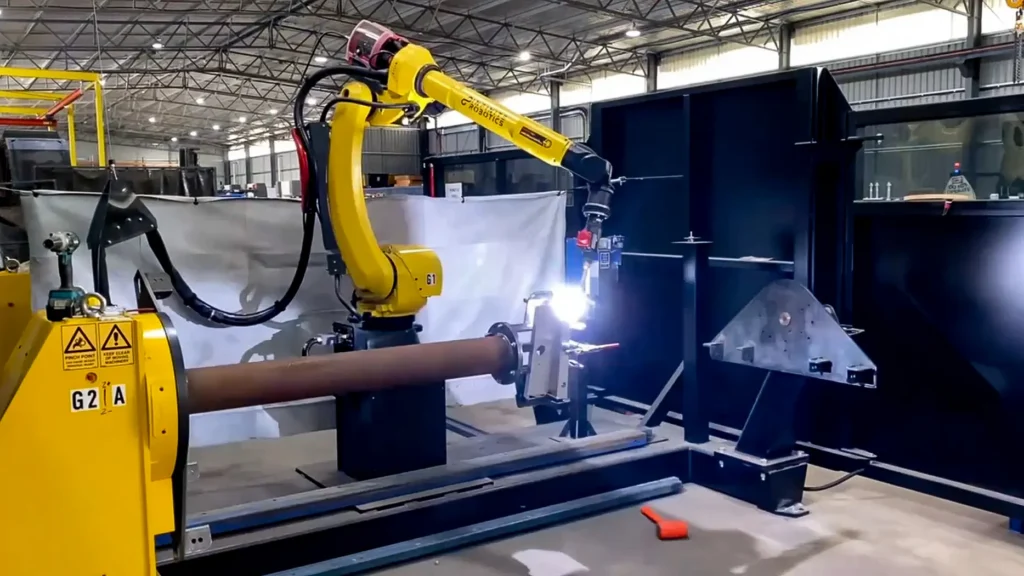
Welding automation offers a powerful solution for manufacturers struggling to meet contract demands or scale their production. Automated welding machines streamline production lines, increasing output and efficiency without sacrificing quality or adding to your headcount.
Robot Welders that Don’t Call in Sick
An automated welding robot adds consistent, programmable welding capacity that operates across shifts without fatigue, inattention, or quality variation. Robot welders work 24/7, without taking holidays or sick days, keeping your pipeline moving smoothly and consistently.
A single automated welding robot can match or exceed the output of multiple manual welders on suitable applications. They also offer predictable cycle times, ensuring your operators always know when the cycle will finish and when to load up the next project. This significantly reduces downtime or disruptions between project changeover.
Scaling the Production Line, Not Just the Headcount
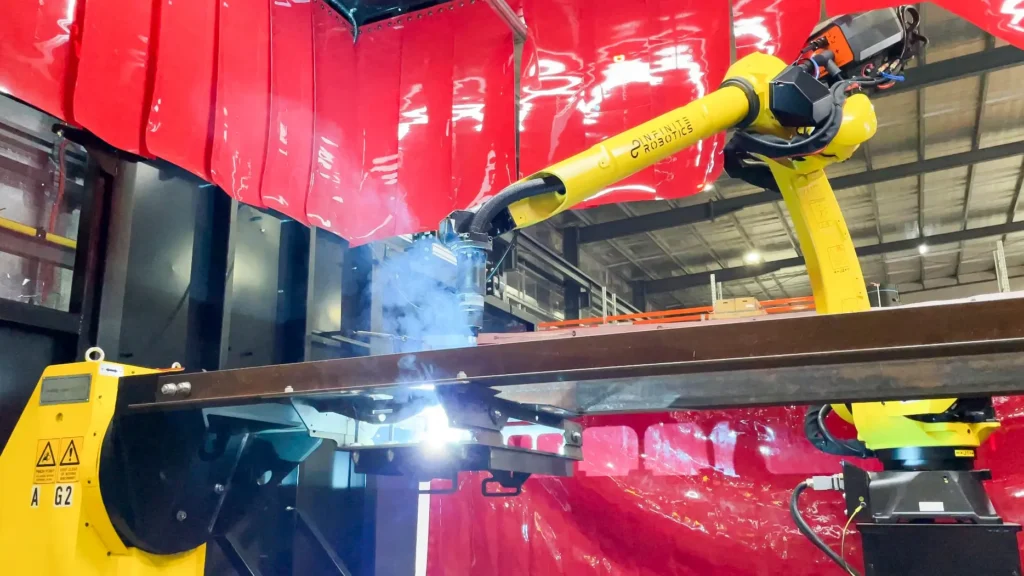
Robotic welding systems integrate into production lines as permanent, scalable infrastructure. They can be integrated quickly and trained to produce high-quality, consistent work in minutes, not years.
You can integrate as many or as few robot welders as you need to meet current demands and add to your team as your operations scale. Start with one, see how much it transforms your production line and then add more. You can also choose from single or dual station systems to meet production demands. These robotic welding systems scale your output without the time, effort and stress of doubling your human workforce.
Collaboratively Scaling With the Workforce You Have
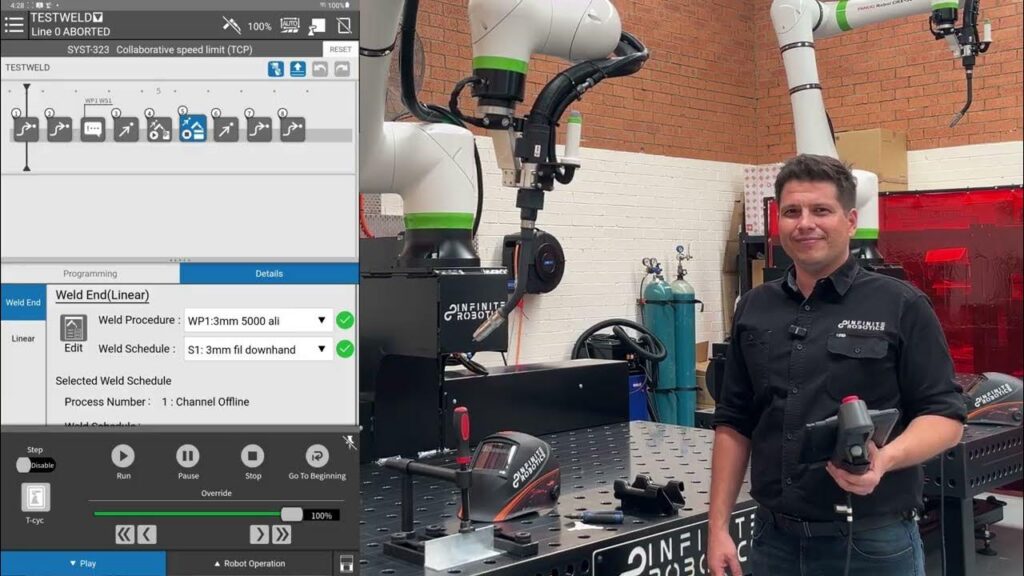
The collaborative welding robot addresses a different but equally important scaling challenge: how to get more output from a mixed-experience workforce. As your most experienced welders near retirement and you’re left with semi-experienced workers and apprentices, you need to find a way to continue to deliver the same quality work.
Welding cobots learn from your best technicians and then automatically produce high-quality, consistent welds. This allows semi-skilled operators to perform complex welds that would otherwise require a certified, experienced welder, effectively expanding the productive capacity of your existing team without extensive, time-consuming upskilling.
It’s important to note that these welding cobots don’t replace a team of skilled welders, they work alongside them, boosting their productivity. So, it’s essential to stay on the recruitment treadmill.
Scale Your Production with Welding Automation
With welding automation solutions you can solve the dilemma of whether to take the next big contract or not. Stop stressing about whether you can meet the demands without overworking your team or sacrificing quality, and start seeing the difference robotic welders can make.
Skilled welding technicians are indispensable, but they’re not the key to scalability. The workforce is just not there. Collaborative welding robots offer a sustainable solution to scale your production line with your current team and the technicians entering the workforce now. Deliver high-quality work consistently on large contracts without doubling your skilled workforce.
Contact our welding specialists today to discover how we can help scale your production line with single station, dual station, or custom robotic welders.